U.S. Tariffs: The Next Chapter


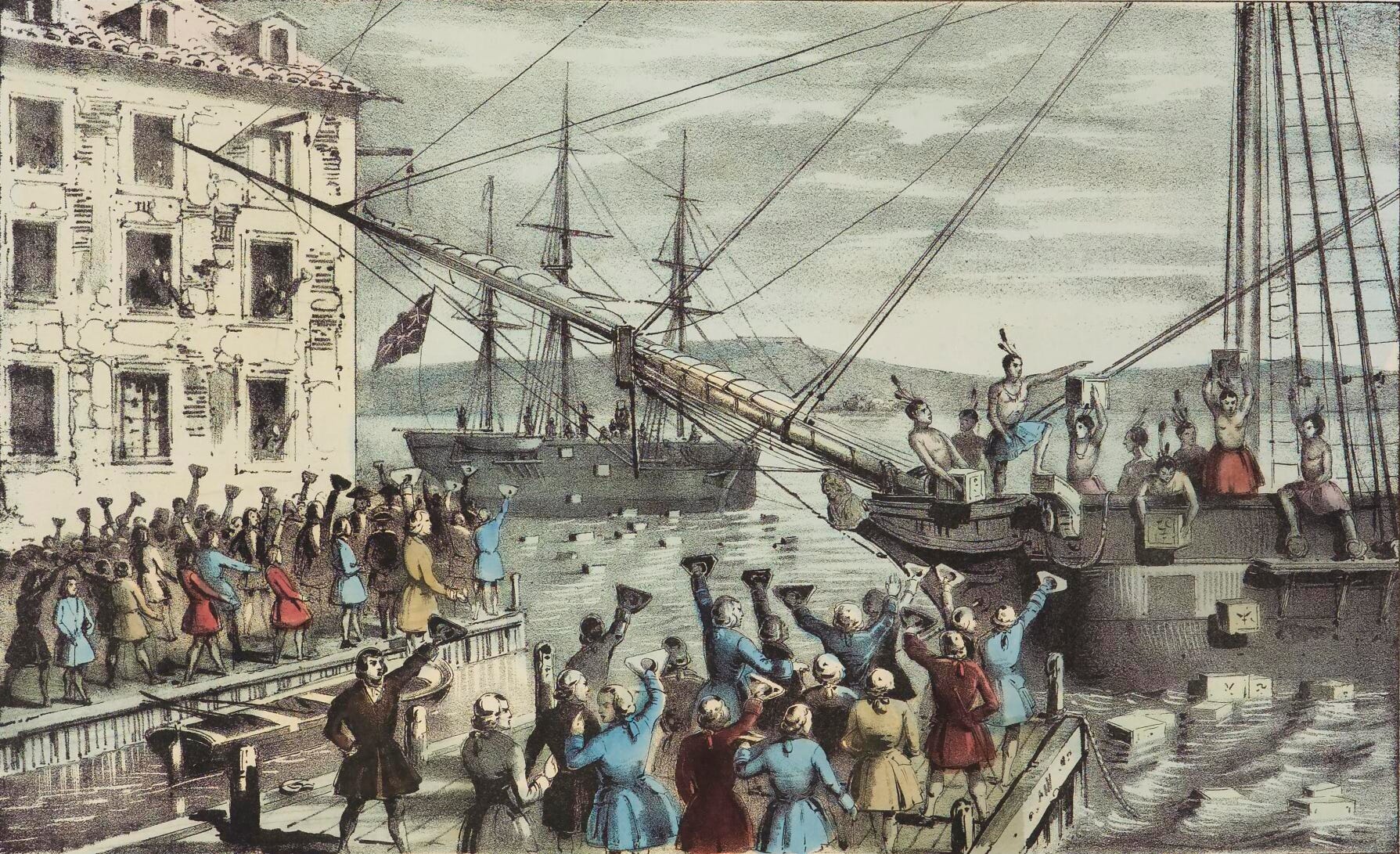
Everything is on fire.
Or at least that’s how it feels whenever Washington starts talking about tariffs. Markets begin to sway like nervous tightrope walkers. Importers start refreshing government websites. Deals pause mid-handshake. And anyone who moves objects across borders starts recalculating.
Last Friday, however, the Supreme Court of the United States reached for what looked very much like a fire extinguisher. In Learning Resources v. Trump, the Court struck down the tariffs President Trump had imposed under the International Emergency Economic Powers Act (“IEEPA”), holding that the President could not use said statute to impose sweeping tariffs.
Within hours, President Trump signalled that tariffs would continue, no longer under the IEEPA but on a different legal basis. He made clear that his administration would not retreat from its broader trade agenda and suggested that higher rates could be on the horizon.
In this blog post, we aim to do three things. First, we will briefly explain the Supreme Court’s decision. Second, we will unpack why it mattersto the art market. Third, we will look ahead at the alternative statutory tools that could still affect the cross-border movement of art and cultural property.
* * *
Since January 2025, President Trump has wielded various US statutes to impose tariffs on nearly all imports. Until last Friday, the main tool in his executive toolkit (and the one used to impose his core “reciprocal” tariffs) was the IEEPA, an emergency statute.
Under the IEEPA, once a national emergency is declared under the National Emergencies Act, the President has broad authority over economic transactions involving foreign interests. It allows the President to “investigate, block during the pendency of an investigation, regulate, direct and compel, nullify, void, prevent or prohibit, any […] importation or exportation of […] any property in which any foreign country or a national thereof has any interest by any person, or with respect to any property, subject to the jurisdiction of the United States […]”
The Trump administration argued that the IEEPA’s broad authority to “regulate” imports during a declared national emergency included the power to impose tariffs. The Supreme Court disagreed. The Court was unwilling to treat the general word “regulate” as a blank cheque for revenue-raising tariffs imposed at any rate, on any goods, for any duration.
So where does this leave us?
IEEPA is off the table as a tariff shortcut. Trump can no longer bypass the constitutional and democratic safeguards of the US Constitution. However, other tools remain. You may have heard people whispering about Section 122, Section 232, Section 301, or Section 338. It’s a lot to take in. To save you from descending into madness (and potentially being sectioned yourself), we wrote a guide a few months ago explaining these different tariff tools. The cliff notes are below.
1. Section 122 of the Trade Act of 1974 directs the President to take measures that may include a temporary tariff of up to 15% when necessary to address “large and serious United States balance-of-payments deficits” or certain other situations that present “fundamental international payments problems”. After 150 days, these tariffs would require Congressional approval.
2. Section 232 of the Trade Expansion Act of 1962 authorises the President to adjust the importation of articles that the Secretary of Commerce finds are being imported in such a way as to threaten to impair national security (these tariffs, for now, mainly relate to steel and aluminium).
3. Section 201 of the Trade Act of 1974 authorises the President to impose tariffs or take certain other actions if the International Trade Commission finds that a surge in imports is causing or threatening serious injury to a U.S. domestic industry.
4. Section 301 of the Trade Act of 1974 allows the United States Trade Representative to impose tariffs in response to actions by foreign countries that violate U.S. rights under international trade agreements or that burden or restrict U.S. commerce in “unjustifiable,” “unreasonable,” or “discriminatory” ways. This provision was used as the legal basis for the tariffs against China in 2018 based on findings that China had engaged in certain conduct relating to forced technology transfers, intellectual property and innovation.
5. Section 338 of the Tariff Act of 1930 directs the President to impose tariffs on articles produced by, or imported on the vessels of, foreign countries that discriminate against U.S. commerce in certain ways. Section 338 has never been used.
For now, you should know that Trump has pivoted to Section 122 of the Trade Act of 1974 which, as noted above, is time-limited and will require Congress to approve any tariffs imposed after 150 days. The rate of the new tariff imposed under Section 122 is a flat rate of 10%. The country of origin of the goods remains paramount because goods from certain countries, including China, continue to attract additional tariffs.
Mr Trump has already threatened to increase the flat rate from 10% to 15%, the maximum rate he can apply under Section 122. But for now, the rate of the new US tariffs applicable to goods with the UK or the EU as the country of origin is 10%.
As a plan C, Jameson Greer (the U.S. Trade Representative) has also promised to rush Section 301 investigations on major U.S. trading partners.
How does this affect the art market?
In a previous post, we noted that the IEEPA contains explicit carve-outs protecting “informational materials”, partly to avoid trampling the First Amendment (Freedom of Speech). The IEEPA cites “artworks” as an example of “informational material”. If the IEEPA is no longer the tariff vehicle of choice, that particular statutory carve-out is potentially lost. But the underlying constitutional sensitivities do not disappear.
The Harmonized Tariff Schedule (HTS) Chapter 97 covers “Works of Art, Collectors’ Pieces and Antiques,” with specific headings:
9701: Paintings, drawings, and pastels executed entirely by hand.
9702: Original engravings, prints, and lithographs.
9703: Original sculptures and statuary.
9704: Postage or revenue stamps, stamp-postmarks, first-day covers, and the like.
9705: Collections and collectors’ pieces of zoological, botanical, mineralogical, anatomical, historical, archaeological, or numismatic interest.
9706: Antiques of an age exceeding one hundred years.
Traditionally, headings 9701, 9702 and 9703 have always been deemed “artworks” and thus shielded from Presidential interference. This was the case, for example, with the Cuban embargo. The Bureau of Industry and Security clarified many times that “artwork is considered “informational materials” exempt from [the embargo] if it is classified under Chapter subheadings 9701, 9702, or 9703 of [the HTS]”
For the IEEPA tariffs, the US Customs and Border Protection agency (CBP) affirmed that headings 9704 and 9705 were also to be deemed “informational materials”. (Question no. 6, under their FAQ’s). 9706 has always been excluded.
In a Fact Sheet posted on the White House website, the Trump administration confirmed that “informational materials” will be shielded from the Section 122 tariffs. We can say almost certainly that headings 9701 to 9703 will fall under that definition (as they always have). Whether the definition also includes headings 9704 and 9705 (as was the case with the IEEPA tariffs) remains to be seen.
Books and photographs remain safe from the new tariffs as “informational material”.
This new episode in the US tariff saga comes at a difficult time as we enter the European art market high season, starting with the TEFAF Fair in Maastricht next month. 20th century design (less than 100 years old) and the decorative arts (Chapter 9706) will be at a disadvantage. Let’s hope that the uncertainty surrounding Chapter 9705 (Collections and collectors’ pieces) will have been resolved by then.